
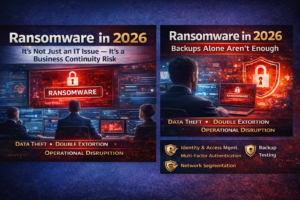
Ransomware is no longer just an IT problem or a headline-grabbing crisis affecting large corporations. It has evolved into a persistent business risk that impacts organizations of every size, including local governments, nonprofits, healthcare providers, and small businesses.
What’s changed is not just the technology attackers use it’s their strategy.
Ransomware is now a business model
Modern ransomware attacks are carefully planned operations. Attackers research their targets, identify weak points, and exploit human and process failures long before malware is deployed.
The biggest shift has been double and triple extortion:
• Systems are encrypted
• Data is stolen
• Organizations are threatened with public exposure, regulatory fallout, or customer notification.
Even organizations with good backups can still face devastating consequences when sensitive data is leaked.
Why backups alone are no longer enough
For years, the standard advice was simple: have good backups. Backups are still essential but they are no
longer sufficient.
Attackers now:
• Steal data before encryption
• Target backup systems themselves
• Exploit delays in detection
If organizations don’t detect attacks early or control access tightly, backups only solve part of the problem.
Common entry points attackers exploit
Ransomware often enters through familiar paths:
• Phishing emails
• Compromised credentials
• Unpatched systems
• Third-party vendor accessThese are not advanced techniques. They are known weaknesses that remain unaddressed in many environments.
What actually reduces ransomware risk
Organizations that reduce ransomware impact focus on fundamentals:
• Strong identity and access management
• Multi-factor authentication everywhere
• Network segmentation
• Endpoint detection and response
• Regular testing of backups and recovery
Most importantly, they assume incidents will happen and plan accordingly.
Leadership’s role
Ransomware resilience requires leadership decisions:
• Funding security as risk reduction, not fear response
• Supporting access restrictions
• Requiring vendor accountability
• Practicing incident response, not just documenting it
Ransomware is not just a cyber issue it’s an operational continuity issue.